Edition 2025 · inaugural conference
Commons AI 2025
The first conference dedicated to a commons approach to AI
What happened
The inaugural edition
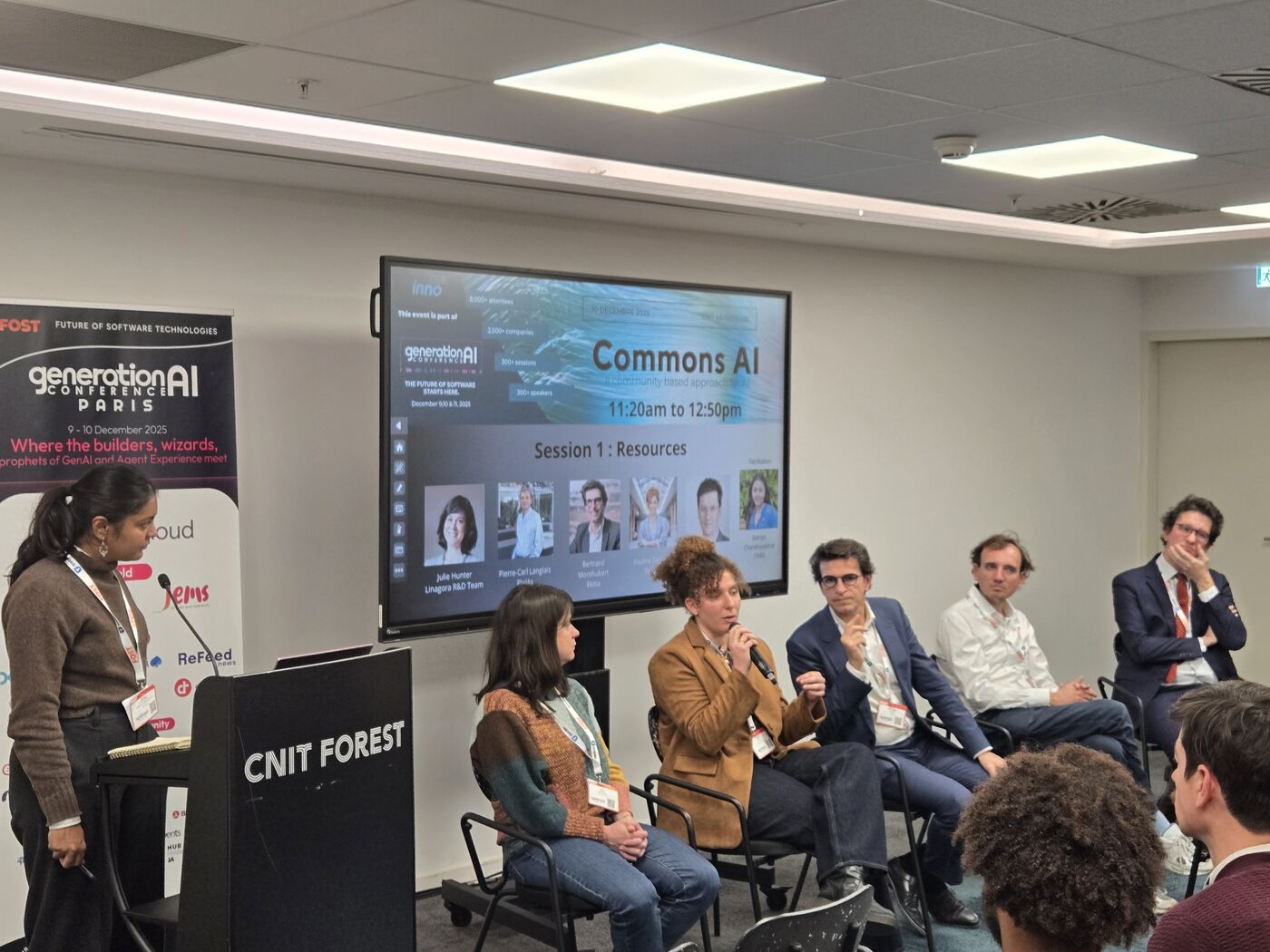
Held on 10 December 2025 at the CNIT in La Défense, within the Future of Software Technologies (FOST) event, the first Commons AI conference was the first meeting fully dedicated to a community- and commons-based approach to AI. It gathered fifteen talks across the three pillars — resources, governance and communities — bringing together businesses, researchers, NGOs and the public sector.
True to our open and scientific approach, all the outputs are published in open access — syntheses, audio recordings and presentations — so anyone can build on them and continue the conversation.
Open access
Recordings, slides & syntheses
🎧 Audio & slides
Full audio recording and speakers’ presentations, gathered in an open repository.
Open the repository →📝 Session syntheses
Written summaries of each of the three sessions, with concrete avenues for collective action.
Read the syntheses →📋 Programme & speakers
The full programme with speakers, abstracts and bios from the inaugural edition.
View the full programme →The programme
Three sessions, three pillars
Producing open, ethical and inclusive AI
OpenLLM France: building transparent and open AI with a French twist
Julie Hunter — Senior Researcher, R&D Team, Linagora
Open data flows: rethinking AI infrastructure after the synthetic turn
Pierre-Carl Langlais — Co-founder, Pleias
Data Spaces and digital commons: building a responsible, transparent and inclusive AI market
Bertrand Monthubert (President) & Pauline Zordan (Lawyer) — Ekitia
Building effective AI systems for mapping that improve the environment
Bertrand Pailhès — Head of Data, Mapping & Forestry, IGN
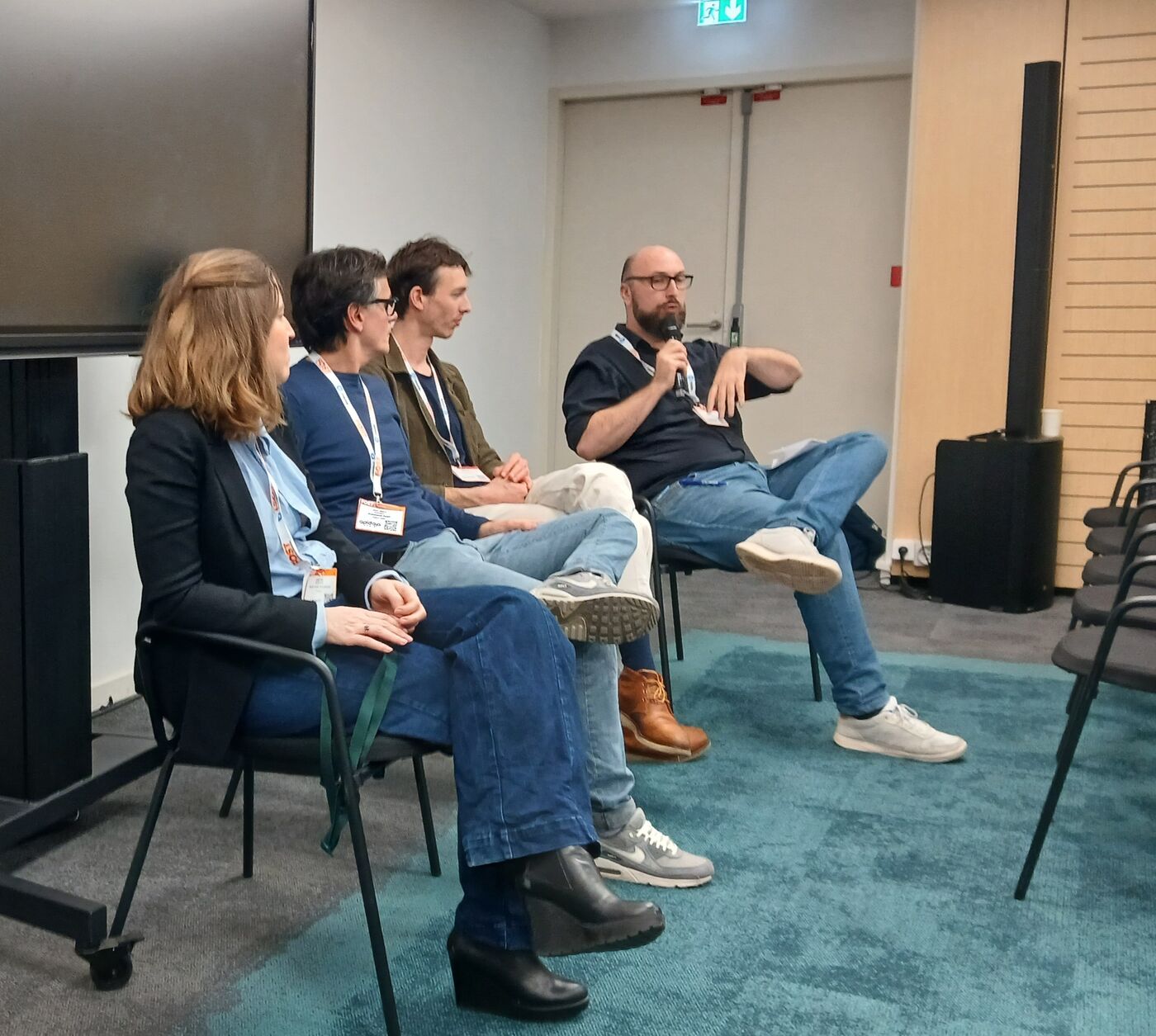
Round table
Facilitator: Ramya Chandrasekhar — Researcher, CNRS
Governance and regulatory mechanisms
Legal frictions for the re-use of the open web for AI training
Ramya Chandrasekhar — Researcher, CNRS
AI data governance: the fiduciary model as a path to collective and controlled value creation
Vincent Bachelet — Université Paris 1 Panthéon-Sorbonne / inno³
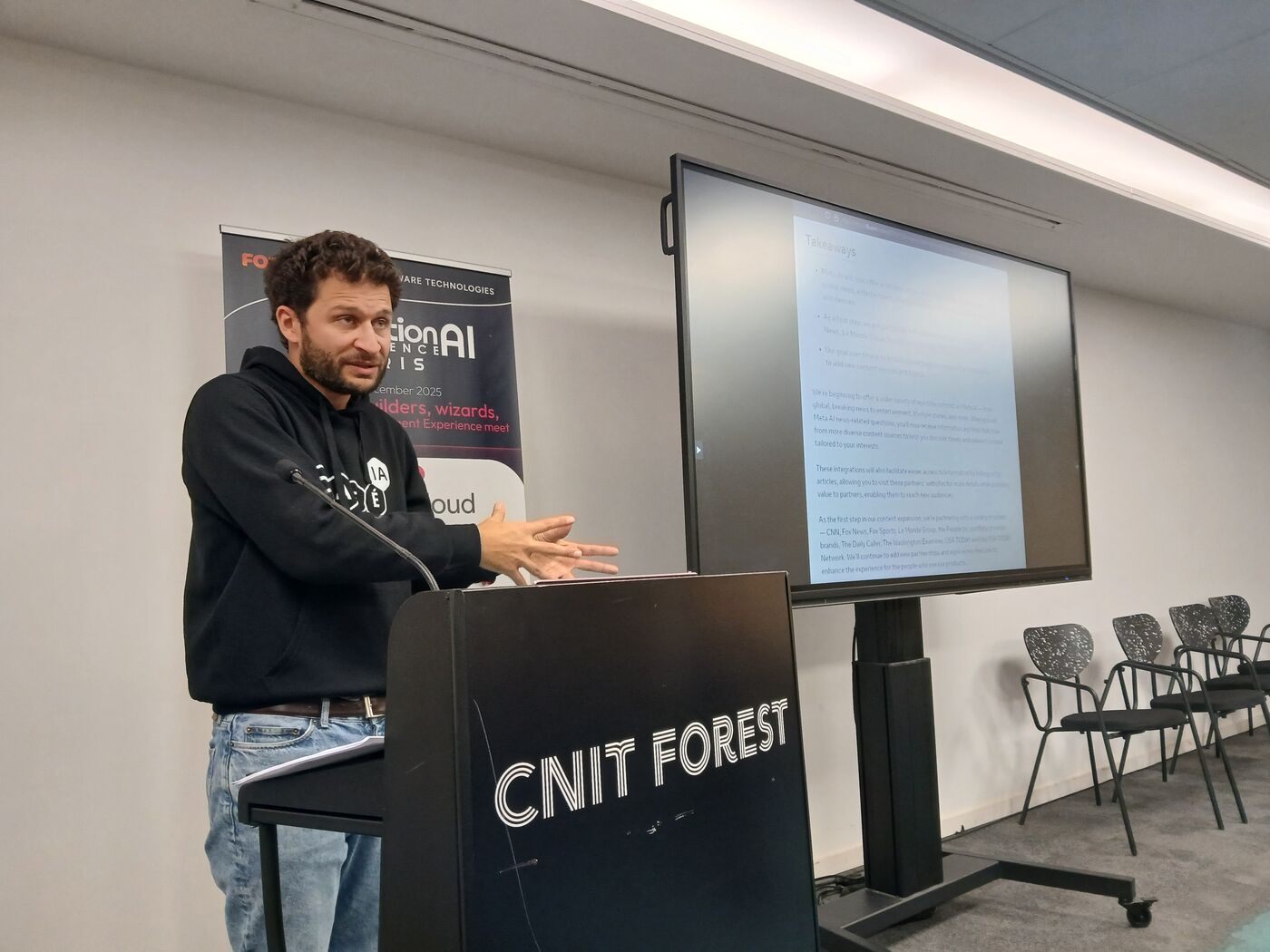
Making data commons a prerequisite for the use of artificial intelligence
Jean Cattan — Café IA (national initiative)
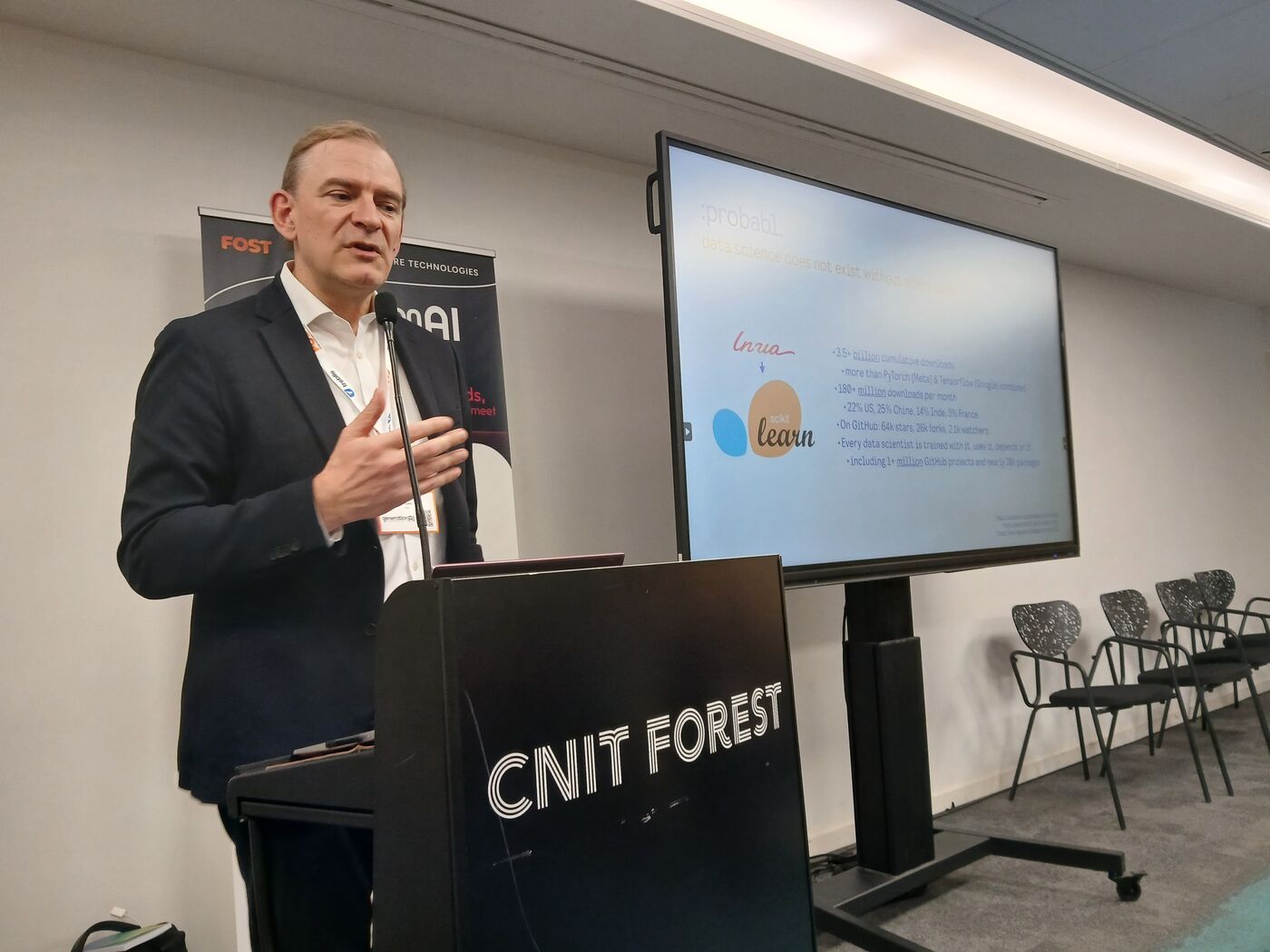
Probabl.ai’s governance and revenue model: a critical open-source AI commons
Yann Lechelle — CEO, Probabl
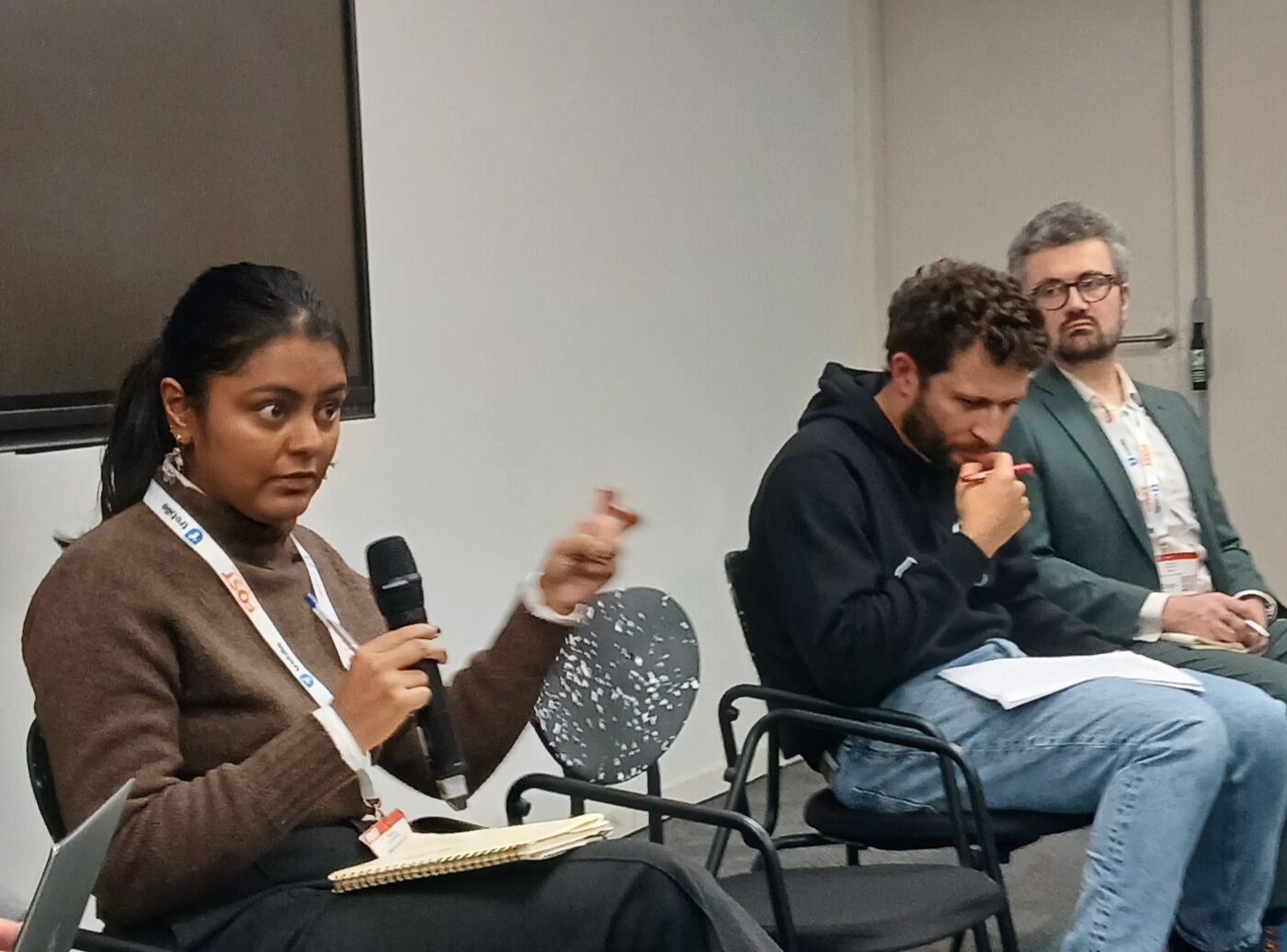
Round table
Facilitator: Benjamin Jean — Founder & President, inno³
Communities, contribution and dialogue
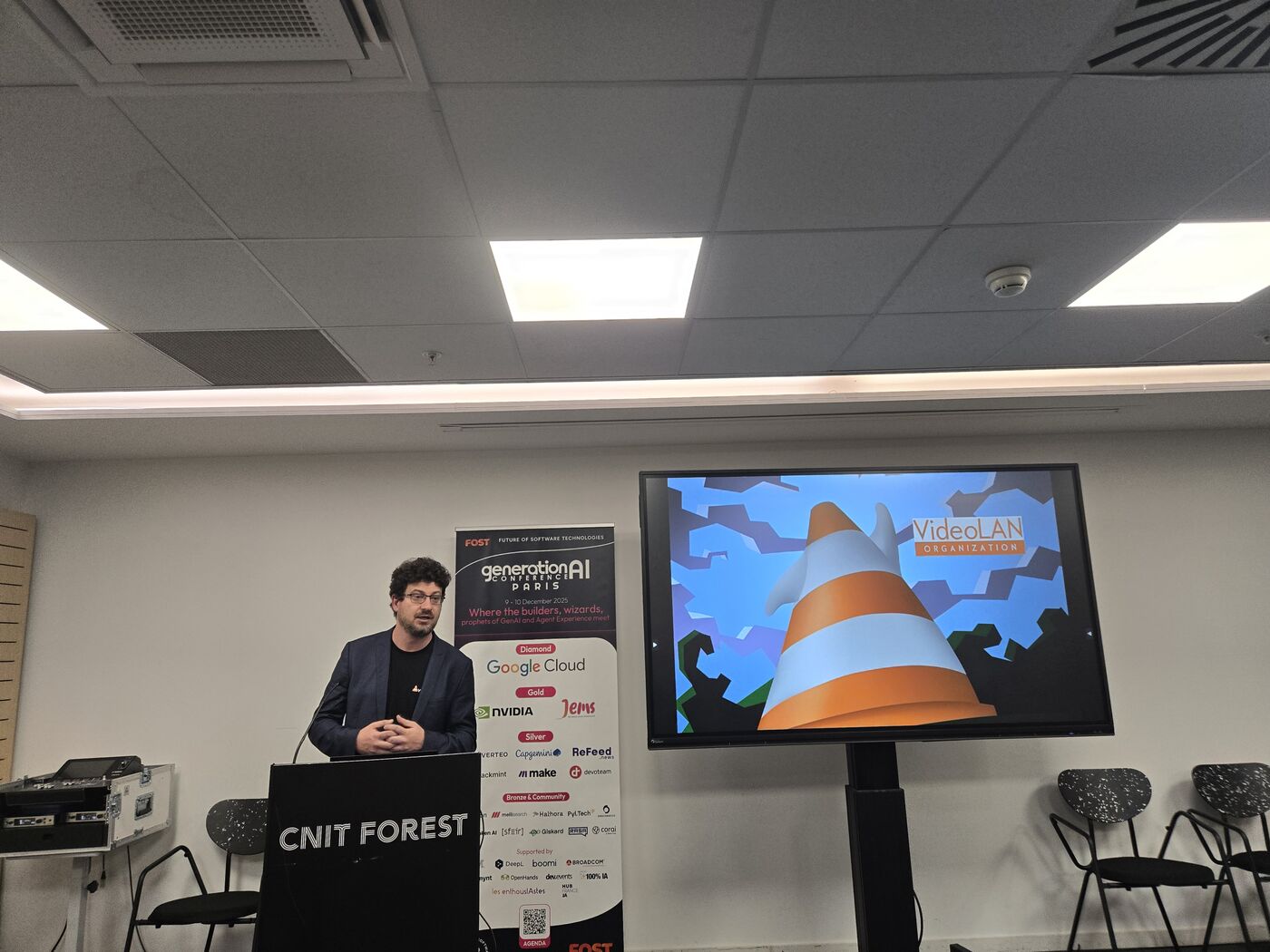
When communities and industry cooperate: towards sustainable AI
Jean-Baptiste Kempf — President, VideoLAN / CEO, Kyber / Tech Fellow, Scaleway
Round table (in French) — A general-interest AI independent of Big Tech: what roles for communities?
With Jean-Marc Borredon (Ville d’Annemasse), Raphaël Bournhonesque (Open Food Facts), Jeanne Brétecher (Social Good Accelerator), Pierre-Yves Gosset (Framasoft) & Jean-Philippe Clément (Ville de Paris)
Outputs
Session syntheses
Session 1 — An essential need for quality data
What communities need to access quality data, and how to articulate degrees of openness across data, models and algorithms.
Read the synthesis →Session 2 — Governance of AI
Which solutions can counter the power asymmetries between AI producers and users?
Read the synthesis →Session 3 — General-interest AI for communities
Towards a general-interest AI serving digital communities, independent of Big Tech.
Read the synthesis →In pictures
The day at CNIT La Défense